Common Sentences in Assamese | Daily Use English to Assamese Sentences
Looking for common sentences in Assamese? This page gives you the most used daily use sentences in Assamese with English translation, Assamese script, and pronunciation. Whether you want to learn how to introduce yourself, greet someone, ask for help, or have a basic conversation in Assamese, all sentences are covered here with correct Assamese translation.
We also have related pages for English word meaning in Assamese, question words in Assamese, prepositions in Assamese, and I love you and romantic phrases in Assamese.
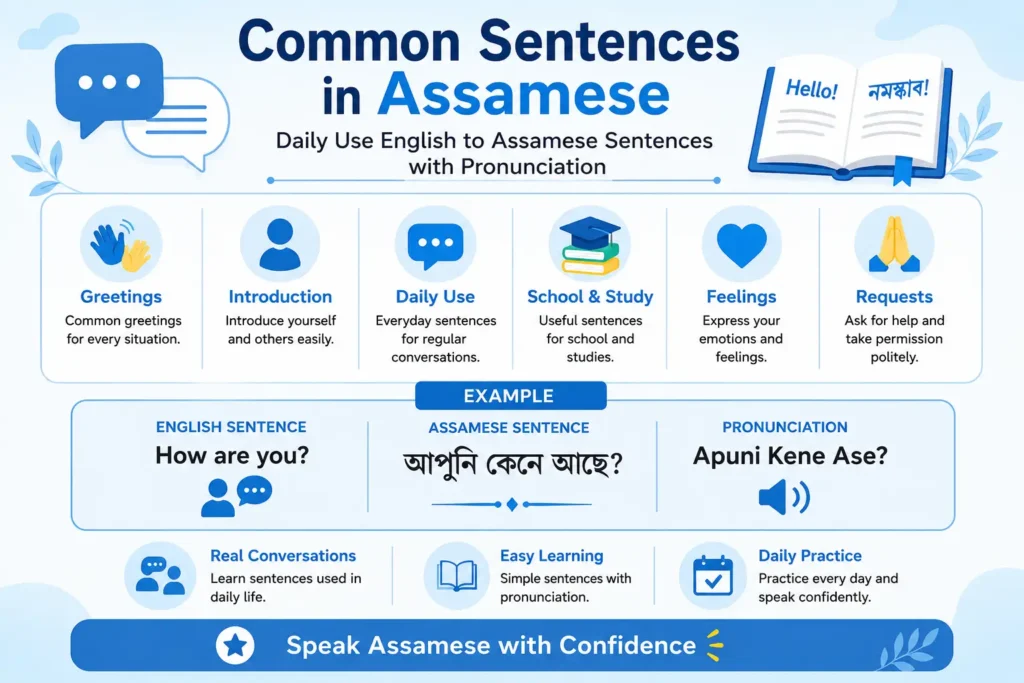
Below infographic shows common Assamese sentences with English meanings and pronunciation for daily use.
Jump to: Greeting Introduction Daily Use School Feelings Requests FAQ
1. Greeting Sentences in Assamese
These are the most searched greeting sentences in Assamese. Learn how to say hello, good morning, good night, how are you, and other common greetings in Assamese with correct pronunciation.
| English Sentence | Assamese Script | Pronunciation |
|---|---|---|
| Hello / Hi | নমস্কাৰ / হাই | Nomoskar / Hi |
| Good Morning | শুভ প্ৰভাত | Subho Probhat |
| Good Afternoon | শুভ দুপৰীয়া | Subho Duporiya |
| Good Evening | শুভ সন্ধ্যা | Subho Xondhya |
| Good Night | শুভ ৰাতি | Subho Rati |
| How are you? | আপুনি কেনে আছে? | Apuni Kene Ase? |
| I am fine, thank you. | মই ভাল আছোঁ, ধন্যবাদ। | Moi Bhal Aso, Dhonyobad. |
| How are you doing? | আপুনি কেনে আছে? | Apuni Kene Ase? |
| Welcome! | স্বাগতম! | Swagotom! |
| Nice to meet you. | আপোনাক লগ পাই ভাল লাগিল। | Apunak Log Pai Bhal Lagil. |
| Long time no see. | বহুদিন দেখা নাই। | Bohudin Dekha Nai. |
| Good to see you. | আপোনাক দেখি ভাল লাগিল। | Apunak Dekhi Bhal Lagil. |
| See you later. | পিছত দেখা হ’ব। | Pisot Dekha Hob. |
| Take care. | যত্ন লোৱা। | Jotno Loa. |
| Thank you. | ধন্যবাদ। | Dhonyobad. |
| You are welcome. | আপোনাক স্বাগতম। | Apunak Swagotom. |
| Excuse me. | মাফ কৰিব। | Maf Koribo. |
| Sorry. | দুঃখিত। | Dukhit. |
| Please. | অনুগ্ৰহ কৰি। | Onugroho Kori. |
| Congratulations! | অভিনন্দন! | Obhinondon! |
2. Introduction Sentences in Assamese
These are common introduction sentences in Assamese. Learn how to tell your name, where you are from, and introduce yourself in Assamese.
| English Sentence | Assamese Script | Pronunciation |
|---|---|---|
| What is your name? | আপোনাৰ নাম কি? | Apunar Nam Ki? |
| My name is Anam. | মোৰ নাম আনাম। | Mor Nam Anam. |
| Where are you from? | আপুনি ক’ৰ পৰা আহিছে? | Apuni Kor Pora Ahise? |
| I am from Assam. | মই অসমৰ পৰা। | Moi Oshomor Pora. |
| How old are you? | আপোনাৰ বয়স কিমান? | Apunar Boyos Kiman? |
| I am 20 years old. | মোৰ বয়স ২০ বছৰ। | Mor Boyos 20 Boxor. |
| What do you do? | আপুনি কি কাম কৰে? | Apuni Ki Kam Kore? |
| I am a student. | মই এজন ছাত্ৰ। | Moi Ejon Xatro. |
| I am a teacher. | মই এজন শিক্ষক। | Moi Ejon Xikhok. |
| Nice to meet you. | আপোনাক লগ পাই ভাল লাগিল। | Apunak Log Pai Bhal Lagil. |
3. Daily Use Sentences in Assamese
Here are the most important daily use sentences in Assamese that every Assamese speaker uses in everyday life. These sentences are very helpful for beginners learning Assamese.
| English Sentence | Assamese Script | Pronunciation |
|---|---|---|
| I will come tomorrow. | মই কাইলৈ আহিম। | Moi Kailoi Ahim. |
| I don’t know. | মই নাজানো। | Moi Najano. |
| I understand. | মই বুজিছোঁ। | Moi Bujiso. |
| I don’t understand. | মই বুজা নাই। | Moi Buja Nai. |
| Please speak slowly. | অনুগ্ৰহ কৰি লাহেকৈ কথা পাতক। | Onugroho Kori Lahekoi Kotha Patok. |
| Can you help me? | আপুনি মোক সহায় কৰিব পাৰিবনে? | Apuni Mok Sohay Koribo Paribo Ne? |
| I need help. | মোৰ সহায় লাগে। | Mor Sohay Lage. |
| Wait a moment please. | অনুগ্ৰহ কৰি এমিনিট ৰওক। | Onugroho Kori Eminit Raok. |
| No problem. | কোনো সমস্যা নাই। | Kono Xomoshya Nai. |
| That is correct. | সেইটো শুদ্ধ। | Xeito Xudhdho. |
| That is wrong. | সেইটো ভুল। | Xeito Bhul. |
| Let’s go. | আহাঁ যাওঁ। | Aha Jao. |
| I am coming. | মই আহি আছোঁ। | Moi Ahi Aso. |
| I am busy right now. | মই এতিয়া ব্যস্ত আছোঁ। | Moi Etiya Byosto Aso. |
| I am tired. | মই ভাগৰ লাগিছে। | Moi Bhagor Lagise. |
| I am hungry. | মোৰ ভোক লাগিছে। | Mor Bhok Lagise. |
| I am thirsty. | মোৰ পিয়াহ লাগিছে। | Mor Piyah Lagise. |
4. School and Study Sentences in Assamese
These Assamese sentences for school are useful for students. Learn how to talk about studies, exams, and school life in Assamese.
| English Sentence | Assamese Script | Pronunciation |
|---|---|---|
| What is your subject? | আপোনাৰ বিষয় কি? | Apunar Bisoy Ki? |
| I study in class 10. | মই দশম শ্ৰেণীত পঢ়োঁ। | Moi Doxom Sreni Poro. |
| When is your exam? | আপোনাৰ পৰীক্ষা কেতিয়া? | Apunar Poriksha Ketiya? |
| I passed the exam. | মই পৰীক্ষাত পাছ হ’লোঁ। | Moi Porikshate Pash Holo. |
| Please open your book. | অনুগ্ৰহ কৰি কিতাপখন খোলক। | Onugroho Kori Kitapkhon Kholok. |
| I have done my homework. | মই গৃহকাৰ্য সম্পন্ন কৰিছোঁ। | Moi Grihokaro Xompon Koriso. |
| I did not understand the lesson. | মই পাঠটো বুজা নাই। | Moi Patho Buja Nai. |
| Can you explain again? | আপুনি পুনৰ বুজাই দিব পাৰিবনে? | Apuni Punor Bujai Dibo Paribo Ne? |
5. Feelings and Emotions Sentences in Assamese
These Assamese sentences about feelings help you express your emotions. Learn how to say I am happy, I am sad, I am angry and more in Assamese.
| English Sentence | Assamese Script | Pronunciation |
|---|---|---|
| I am very happy today. | মই আজি বহুত সুখী। | Moi Aji Bohut Sukhi. |
| I am sad. | মই দুখী। | Moi Dukhi. |
| I am angry. | মই খং উঠিছে। | Moi Khong Uthise. |
| I am scared. | মোৰ ভয় লাগিছে। | Mor Bhoy Lagise. |
| I am worried. | মই চিন্তিত। | Moi Xintit. |
| I am excited. | মই উত্তেজিত। | Moi Uttejit. |
| I am proud of you. | মই তোমাৰ বাবে গৌৰৱান্বিত। | Moi Tomar Babe Gourobonbit. |
| I miss you. | মই তোমাক মনত পেলাওঁ। | Moi Tomak Monot Pelao. |
| I love you. | মই তোমাক ভালপাওঁ। | Moi Tomak Bhalpao. |
| I need you. | মোৰ তোমাক প্ৰয়োজন। | Mor Tomak Proyojon. |
👉 For more romantic and emotional phrases, visit our I love you and Emotional Phrases in Assamese page.
6. Request and Permission Sentences in Assamese
| English Sentence | Assamese Script | Pronunciation |
|---|---|---|
| Please help me. | মোক সহায় কৰক। | Mok Sohay Korok. |
| Can I come in? | মই ভিতৰত সোমাব পাৰিমনে? | Moi Bhitorot Xomab Parim Ne? |
| May I use your phone? | মই আপোনাৰ ফোন ব্যৱহাৰ কৰিব পাৰিমনে? | Moi Apunar Fon Byobohar Koribo Parim Ne? |
| Please sit down. | অনুগ্ৰহ কৰি বহক। | Onugroho Kori Bohok. |
| Please give me water. | মোক পানী দিয়ক। | Mok Pani Diyok. |
| Please repeat that. | অনুগ্ৰহ কৰি পুনৰ কওক। | Onugroho Kori Punor Kaok. |
| Can I ask you something? | মই আপোনাক কিবা সুধিব পাৰিমনে? | Moi Apunak Kiba Xudibo Parim Ne? |
| No, thank you. | নহয়, ধন্যবাদ। | Nohoy, Dhonyobad. |
Conclusion
This page covers the most important common sentences in Assamese for daily use. From greetings and introductions to feelings and requests — you can use these sentences in real conversations immediately.
For more Assamese learning content, visit our English Word Meaning in Assamese dictionary, Question Words in Assamese, and Emotional Phrases in Assamese pages.